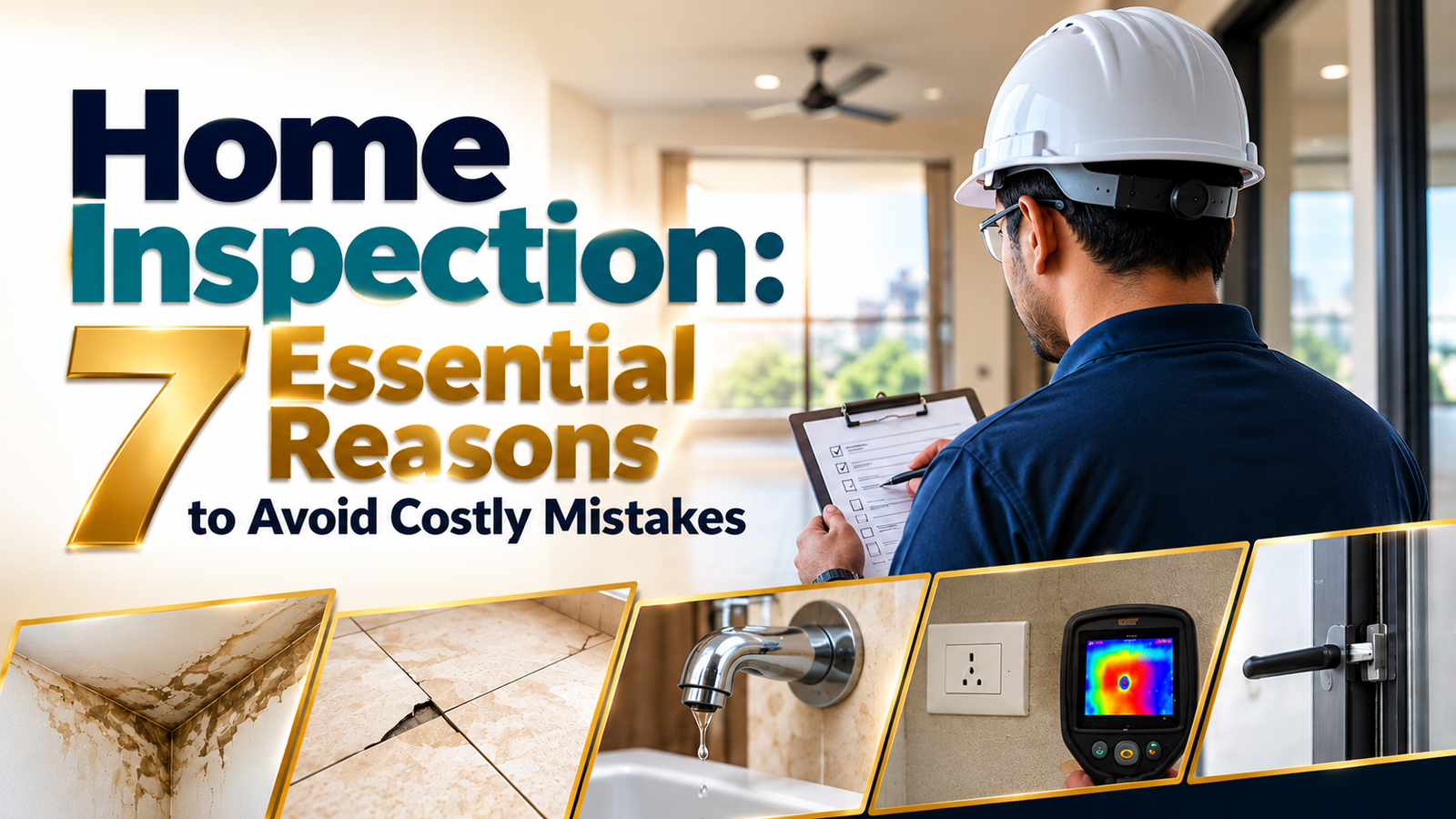
Home Inspection: 7 Essential Reasons to Avoid Costly Mistakes
Home inspection is the smartest step a buyer can take before signing a property deal. A home inspection is an unbiased, detailed check of a property's structure, wiring, plumbing and finishing. It shows you what you are really buying, not just what looks good on a showroom day.
Buying a house or flat is likely the biggest purchase of your life. Yet many buyers rely on a quick walk-through. That habit often leads to leaks, cracks and electrical faults showing up soon after possession.
In this guide, you will learn why home inspection matters, what it covers, and how to choose reliable home inspection services.
Table of Contents
- What Is a Home Inspection?
- 7 Reasons Why Home Inspection Is Necessary
- Types of Property Inspection Services
- What a Professional Home Inspection Covers
- Home Inspection Before Possession
- Legal Checks to Pair With Your Inspection
- How to Choose Home Inspection Near Me
- Common Mistakes Buyers Make
- FAQs
- Conclusion
What Is a Home Inspection?
A home inspection is a non-invasive assessment of a property's condition. A trained inspector checks the building from roof to foundation and records every defect in a written report.
It is not a pass-or-fail exam. A good home inspection report ranks problems by urgency, so you know what needs fixing now and what can wait.
Residential home inspection suits resale homes, builder floors, villas and apartments alike. It works just as well as a new home inspection when the paint is still wet.
7 Reasons Why Home Inspection Is Necessary
1. Home Inspection Reveals Hidden Defects
Fresh paint can hide damp patches, hairline cracks and poor waterproofing. A professional home inspection uses moisture meters and thermal imaging to look behind the surface.
Most of these issues are invisible to the naked eye. An expert can find them.
2. Home Inspection Saves You Money
A small repair found today can become a big bill by next monsoon. Early inspection helps you fix seepage, wiring or plumbing problems while they are still cheap.
Think of the fee as insurance, not an expense.
3. Home Inspection Gives You Negotiation Power
A written report is solid evidence. You can ask the seller to repair defects or reduce the price. Many buyers save far more than the inspection cost by using their home inspection findings in negotiation.
4. Home Inspection Protects Your Family's Safety
Faulty wiring, gas leaks and weak structures are real dangers. An independent home inspection flags these risks before your family moves in.
5. Home Inspection Keeps Builders Accountable
A new apartment inspection lets you list snags before handover and ask the builder to fix them. Flat inspection services often find uneven flooring, leaking taps, loose fittings and poor finishing.
6. Home Inspection Brings Peace of Mind
Taking a loan and paying a large sum is stressful. A clear report lets you decide with confidence instead of fear.
7. Home Inspection Helps Plan Future Maintenance
Your report doubles as a maintenance roadmap. You will know the condition of the roof, the state of waterproofing and when key systems need servicing.
Types of Property Inspection Services
Different situations call for different property inspection services. Here are the most common ones:
- Pre-purchase home inspection: Done before you pay a token amount or sign the agreement. Property inspection before buying protects you from a bad deal.
- Pre-possession home inspection: Done before you accept the keys to a new flat. It lets you raise defects while the builder is still responsible.
- New home inspection: Checks a newly built house for construction and finishing flaws.
- Apartment inspection: Covers balconies, walls, plumbing lines and common-area connections.
- Independent home inspection: Done by a third party with no link to the seller or builder, so the report stays unbiased.
- House inspection services: Cover independent houses, villas and duplexes.
What Does a Professional Home Inspection Cover?
A thorough professional home inspection usually checks the following:
- Structure: cracks, columns, beams, slabs and foundation
- Roof and terrace: waterproofing, slope and drainage
- Electrical: wiring, switches, earthing and load capacity
- Plumbing: leaks, water pressure and drainage
- Doors and windows: alignment, locks and sealing
- Flooring and walls: tiles, plaster, paint and hollow spots
- Damp and mould: seepage, dampness and ventilation
- Safety: railings, fire exits and ventilation
The final report should include photos, clear notes and repair recommendations. A report without pictures is hard to use in a negotiation.
Home Inspection Before Possession: Why Timing Matters
Once you accept possession and move in, proving that a defect came from construction becomes harder. Builders may also become slower to respond.
That is why a pre-possession home inspection should happen before you sign the possession letter. A home inspection before possession gives you a clear snag list and a stronger position.
Here is a simple process:
- Book the inspection a few days before handover.
- Attend it in person and ask questions.
- Send the report to the builder in writing.
- Take possession only after the fixes are done.
- Recheck the repaired items.
Legal Checks to Pair With Your Home Inspection
A physical check covers only half the picture. You also need to confirm the legal side of the property.
For new projects in Odisha, verify that the project is registered on the Odisha Real Estate Regulatory Authority (ORERA) portal. Registration gives you access to approved plans and project details.
For registration, stamp duty and guideline values, refer to IGR Odisha. For general background on how inspections work, see this overview of home inspection on Wikipedia.
Remember that a home inspection does not replace legal due diligence. Use both together for a safe purchase.
How to Choose Home Inspection Near Me
When you search for home inspection near me, do not pick the first result. Compare a few providers using these points:
- Experience: Look for a track record in residential home inspection.
- Sample report: Ask to see one before you book.
- Tools: Moisture meters, thermal cameras and electrical testers matter.
- Independence: The inspector should have no link to the builder or seller.
- Clear scope: Know exactly what is and is not covered.
If you want trusted support, explore the home inspection services from Urban Estates. You can also read more on property buying guides before you decide.
How Long Does an Inspection Take?
Most flats take two to four hours. Larger villas can take longer. Reports usually arrive within a day or two.
The cost depends on the property size and the inspection scope. Ask for a written quote before you book.
Common Mistakes Buyers Make
- Skipping a home inspection to save a small fee
- Hiring the builder's own inspector
- Not attending the inspection in person
- Ignoring "minor" issues that grow with time
- Booking the inspection after possession
FAQs
Is home inspection necessary for a new flat?
Yes. New flats often have finishing defects, poor waterproofing and loose fittings. A new apartment inspection catches them early.
Who should pay for a home inspection?
The buyer usually pays, because the report protects the buyer's interest. This also keeps the report independent.
Can a home inspection fail a property?
No. It is not a pass-or-fail test. It gives you facts so you can decide, negotiate or walk away.
Conclusion
A home inspection is a small investment that guards a very large one. It exposes hidden defects, strengthens your negotiation and protects your family.
Whether you choose a pre-purchase home inspection or a pre-possession check, book it early and choose an independent expert. To schedule a professional home inspection, contact Urban Estates today.
